A Christian Parent’s Guide to Raising Thoughtful, Grounded Children in a Digital World
Every parent asks it eventually.
Sometimes quietly.
Sometimes in frustration.
Sometimes while staring at a glowing screen and wondering how it got this late.
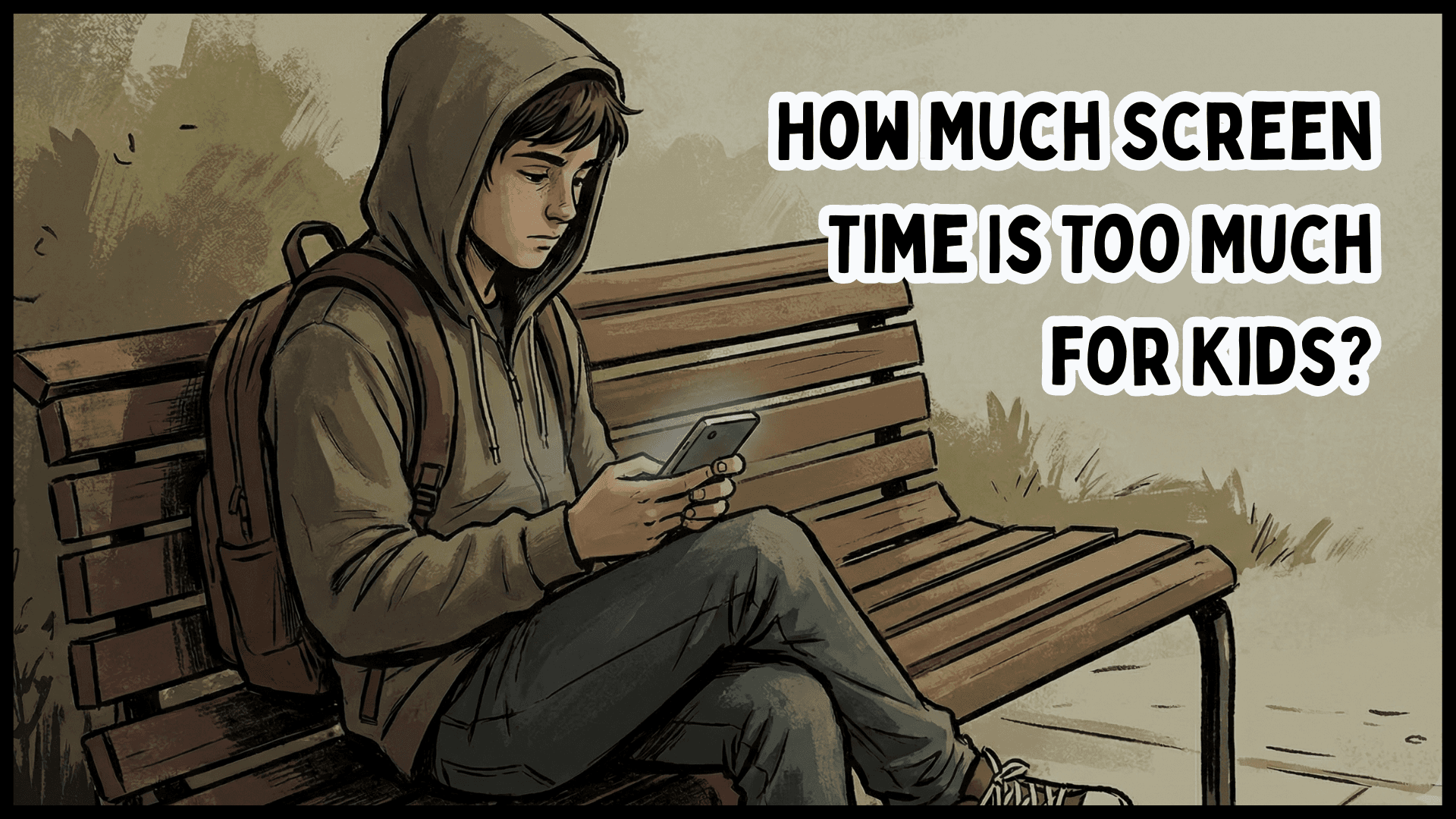
How much screen time is too much for kids?
It’s one of the most searched parenting questions today—and for good reason. Screens are everywhere. Phones. Tablets. TVs. Laptops. Classrooms. Cars. Bedrooms. Even church lobbies.
And yet, the question most parents are really asking is deeper than minutes and hours.
They’re asking:
Why does my child seem more distracted lately?
Why is it harder for them to sit still?
Why do they get bored so easily?
Why do they seem more irritable, anxious, or restless?
And perhaps most importantly:
How do I protect my child’s heart and faith in a world that never stops scrolling?
This isn’t about guilt.
It’s about wisdom.
And it’s about understanding what screens are quietly replacing.
The Question Behind the Question
When parents ask about screen time, they’re rarely asking for a number.
They’re asking:
- How do I help my child focus?
- How do I help them love real things?
- How do I help them hear God’s voice in a noisy world?
- How do I raise a child who can think, feel, and choose wisely?
The Bible doesn’t give us a screen-time chart, but it gives us something far more helpful:
a vision for how the human heart is formed.
And that’s where this conversation really begins.
Why Screens Affect Kids Differently Than Adults
Children are not small adults.
Their brains are still developing. Their attention spans are still forming. Their sense of identity, purpose, and morality is still under construction.
What they consume doesn’t just entertain them — it shapes them.
Screens are designed to:
- move quickly
- stimulate constantly
- reward instantly
- demand very little reflection
That combination is powerful, especially for young minds.
And while screens themselves are not evil, they often crowd out the very things children need most to grow strong inside:
- stillness
- imagination
- patience
- reflection
- moral reasoning
- quiet curiosity
These are not modern values.
They are biblical ones.
What Scripture Teaches Us About Attention
The Bible speaks often about attentiveness, watchfulness, and guarding the heart.
“Be still, and know that I am God.” — Psalm 46:10
“Above all else, guard your heart, for everything you do flows from it.” — Proverbs 4:23
Notice the pattern.
Faith grows in stillness.
Wisdom grows in reflection.
Transformation requires attention.
Screens, when overused, train the opposite.
They teach:
- constant stimulation
- shallow focus
- emotional reactivity
- instant gratification
Over time, this makes it harder for children to engage with slower, deeper things — including reading, prayer, and meaningful conversation.
So… How Much Screen Time Is Too Much?
There’s no single number that fits every family.
But here’s a better question to ask:
Is screen time replacing something essential?
If screens are replacing:
- reading
- outdoor play
- imagination
- family conversation
- quiet reflection
- creative thinking
…then the balance is off.
Not because screens are evil — but because something sacred is being crowded out.
For children between ages 8–13, this balance is especially important. This is a formative window when:
- attention habits are set
- imagination is still active
- moral reasoning is developing
- faith begins to move from inherited to internal
What they practice now becomes their default later.
Why Reading Still Matters More Than Ever
Reading does something screens can’t.
It slows the mind.
It asks children to:
- imagine rather than receive
- interpret rather than react
- sit with uncertainty
- follow cause and effect
- consider right and wrong
When a child reads a story, they aren’t just absorbing information — they’re rehearsing life.
They learn:
- how courage works
- what temptation looks like
- how choices have consequences
- what it means to sacrifice
- how good and evil differ
This is why stories have always been one of God’s primary teaching tools.
Jesus didn’t give bullet points.
He told stories.
Parables invite reflection. They require patience. They make listeners wrestle with meaning.
That’s not accidental.
The Role of Imagination in Faith
Some parents worry about imagination.
But imagination is not the enemy of faith.
It is one of its foundations.
Imagination allows a child to:
- picture goodness
- recognize darkness
- hope for redemption
- understand sacrifice
- grasp unseen truth
Faith itself requires imagination — the ability to trust what we cannot yet see.
When children spend all their time consuming fast, loud, surface-level content, imagination weakens.
When they spend time with stories, imagination strengthens.
And imagination is the soil where faith grows.
What Happens When Screens Take Over
Too much screen time doesn’t just affect behavior — it affects formation.
Parents often notice:
- shorter tempers
- less interest in books
- boredom when screens are gone
- resistance to quiet
- difficulty focusing
- emotional volatility
This isn’t a moral failure.
It’s neurological.
The brain becomes accustomed to constant stimulation, and stillness begins to feel uncomfortable.
But stillness is exactly where reflection happens.
And reflection is where faith takes root.
A Better Question Than “How Much Screen Time?”
Instead of asking:
“How many hours is okay?”
Try asking:
- Does my child still enjoy reading?
- Can they sit quietly with a book?
- Do they imagine stories on their own?
- Do they ask thoughtful questions?
- Can they tolerate boredom without distress?
These are signs of a healthy inner life.
And they matter far more than any specific time limit.
Why Stories Are the Best Alternative to Screens
When you replace screen time, it has to be with something better — not just something quieter.
Stories offer:
- engagement without overload
- excitement without chaos
- challenge without anxiety
- meaning without manipulation
Fantasy gives children:
- heroes who choose courage
- villains who reveal the cost of evil
- worlds where actions matter
- hope that light wins
These are spiritual lessons, even when they aren’t labeled as such.
And they linger.
A child may forget a show they watched last week.
But they remember the story that made them feel brave.
What a Healthy Balance Looks Like
A healthy relationship with screens doesn’t mean banning them.
It means placing them in their proper place.
A good rhythm often looks like:
- Screens used intentionally, not constantly
- Reading as a daily habit
- Family conversations without devices
- Quiet time built into the day
- Stories valued as much as entertainment
The goal isn’t restriction.
It’s formation.
The Quiet Power of Reading Together
One of the simplest and most powerful things a parent can do is read with their child.
Not as a lesson.
Not as homework.
But as shared time.
This does several things at once:
- builds trust
- slows the nervous system
- strengthens attention
- creates emotional safety
- opens doors for conversation
And most importantly, it shows children that stories matter.
That time spent with kids (imagining) is time well spent.
Why This Matters Spiritually
Faith is not built in noise.
It grows in quiet moments.
In reflection.
In questions.
In stories that linger.
When children learn to slow down, to think deeply, to imagine wisely — they are being trained for a lifelong walk with God.
Because faith is not sustained by constant stimulation.
It is sustained by truth, reflection, and trust.
A Gentle Encouragement for Parents
If you’re worried about screen time, that’s not failure — it’s awareness.
You don’t need to overhaul your home overnight.
You don’t need strict rules or guilt.
Start small.
Add one more book.
One more quiet moment.
One more story before bed.
One less screen before sleep.
Those small choices compound.
And they matter more than you think.
A Final Thought
Children don’t need perfect parents.
They need present ones.
They don’t need endless entertainment.
They need meaning.
And they don’t need constant stimulation.
They need space — space to imagine, to wonder, to grow.
That space is where faith takes root.
That space is where stories work their quiet magic.
And that’s why, even in a digital age, books still matter.
A Note for Parents Looking for Thoughtful Stories
If you’re looking for stories that encourage imagination, courage, and moral clarity — stories that respect a child’s intelligence while nurturing their faith — that’s exactly why I write.
Not to replace Scripture.
Not to preach.
But to give young readers stories that point their hearts toward light, truth, and hope.
Because the stories children grow up with shape the adults they become.
And that’s something worth protecting.